


The shift in software engineering isn’t linear – it’s exponential. AI is no longer an experimental tool at the edge of the development workflow. It is actively reshaping how engineers write code, design systems, structure teams, and think about their careers. This year at Craft, we are not asking whether AI will change software engineering. That transformation is already underway. The real question is: how do we adapt intentionally and effectively?
Because this is one of those rare moments in the industry when the often-repeated phrase “those who stay out will fall behind” stops being a cliché and becomes reality. Many engineers already feel the pressure of keeping up, and the pace shows no signs of slowing down. New models, new agent frameworks, new evaluation methods, and new architectural implications appear almost weekly. Those who invest in understanding these changes will accelerate. Those who don’t may find the gap widening faster than expected.
Craft Conference 2026 is designed around this inflection point.
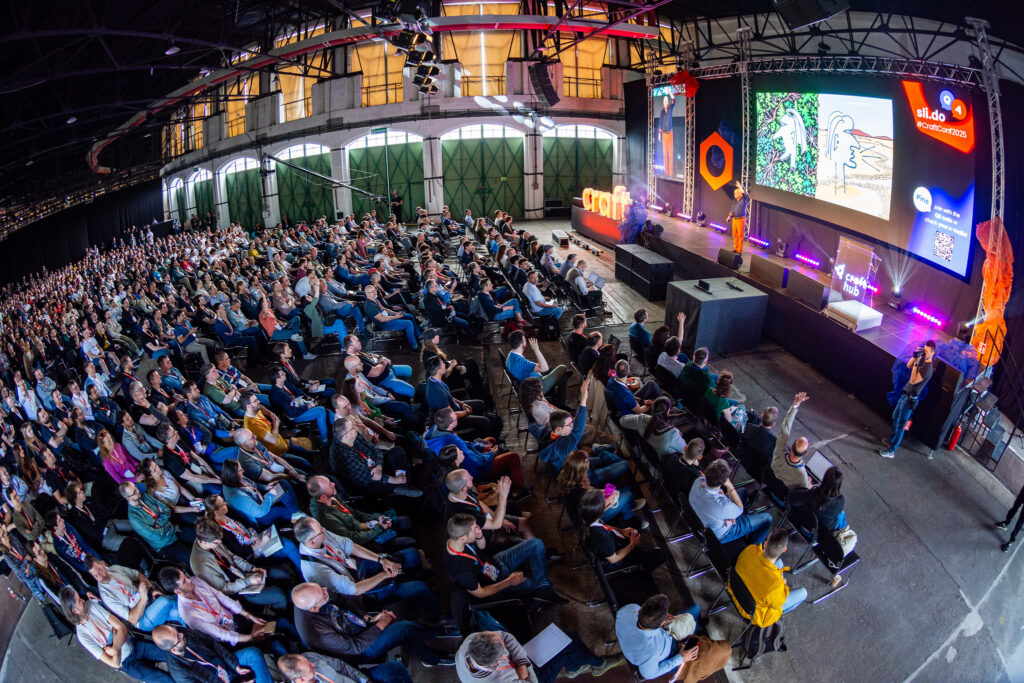
AI-Native Software Engineering: When AI Is Not a Tool, but a Teammate
At the heart of the conference is its largest thematic pillar: AI-native software engineering.
AI-native development means designing software, workflows, and teams with the assumption that AI is part of the default environment. It’s no longer about occasionally asking an AI assistant for help. Instead, it means building development processes where AI actively participates in coding, reviewing, testing, and even architectural exploration.
Engineers from companies such as Anthropic, NVIDIA, Meta, Amazon Web Services, and IBM will share how their teams are adapting workflows, code review practices, and system design principles to this new reality.
From Anthropic’s Claude Code team, Kashyap Murali presents two highly anticipated talks. One focuses on making AI coding agents trustworthy – a crucial challenge as teams increasingly rely on AI-generated code. The other explores one of the fastest-emerging disciplines in AI development: evaluating and improving the reliability of AI-driven engineering workflows.
At NVIDIA, Aaron Erickson addresses one of the industry’s most complex technical challenges: how to combine deterministic software systems with probabilistic AI models in production environments.
From Meta, Ian Thomas explores what it truly means for entire engineering teams to become AI-native – not just more productive, but fundamentally different in how they collaborate with intelligent systems.
Architecture, Platforms, and the Human Factor
As AI accelerates coding, architecture becomes even more important.
A well-structured system enables AI tools to be effective. Poor architecture, on the other hand, can make AI-generated outputs confusing, inconsistent, or even unsafe.
Experts such as Gregor Hohpe, Neal Ford, and Mark Richards will explore how software architecture needs to evolve for AI-driven systems and rapidly accelerating development cycles.
Michael Feathers will address another critical challenge: legacy systems. His talk explores why healthy codebases are the first step toward becoming truly AI-ready. Without maintainable foundations, AI can amplify complexity instead of reducing it.
But Craft also focuses on the human side of these transformations.
Rapid technological change inevitably creates stress, uncertainty, and pressure for engineers and organizations. Talks on mindset, cognitive bias, and team psychology examine how developers and leaders can navigate these challenges.
Michelle Brush from Google explains the Jevons paradox in the context of AI: when automation makes certain tasks easier, the remaining problems often become significantly harder.
Meanwhile, Sander Hoogendoorn describes what he calls the exponential era – a time when technological change accelerates so rapidly that standing still effectively means falling behind.
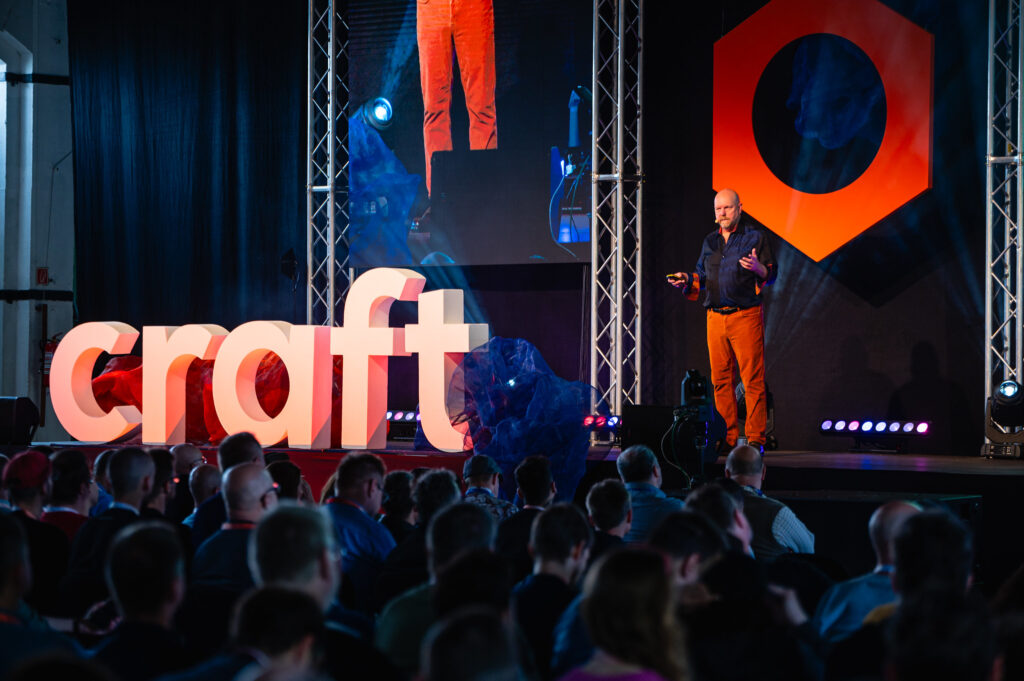
Guiding Through Change: Voices That Shaped the Industry
Craft 2026 also brings together some of the most influential thinkers in modern software engineering.
- Kent Beck, creator of Extreme Programming and Test-Driven Development, and author of Tidy First? returns to Craft to share his perspective on how foundational engineering principles evolve in an AI-powered world.
- Gergely Orosz, one of the most widely read technology writers and newsletter authors today, will provide both historical context and practical insight. His talk explores which engineering practices remain timeless and which must evolve as AI reshapes the development landscape.
- Veronica Clark, a mindset coach working with engineers and technology leaders, offers a complementary perspective. Her sessions focus on managing the mental and emotional challenges that accompany rapid technological change – a topic increasingly relevant as many developers experience uncertainty about the future of their profession.
Together, these speakers represent architects of past transformations who are now engaging with the next major evolution of the field.
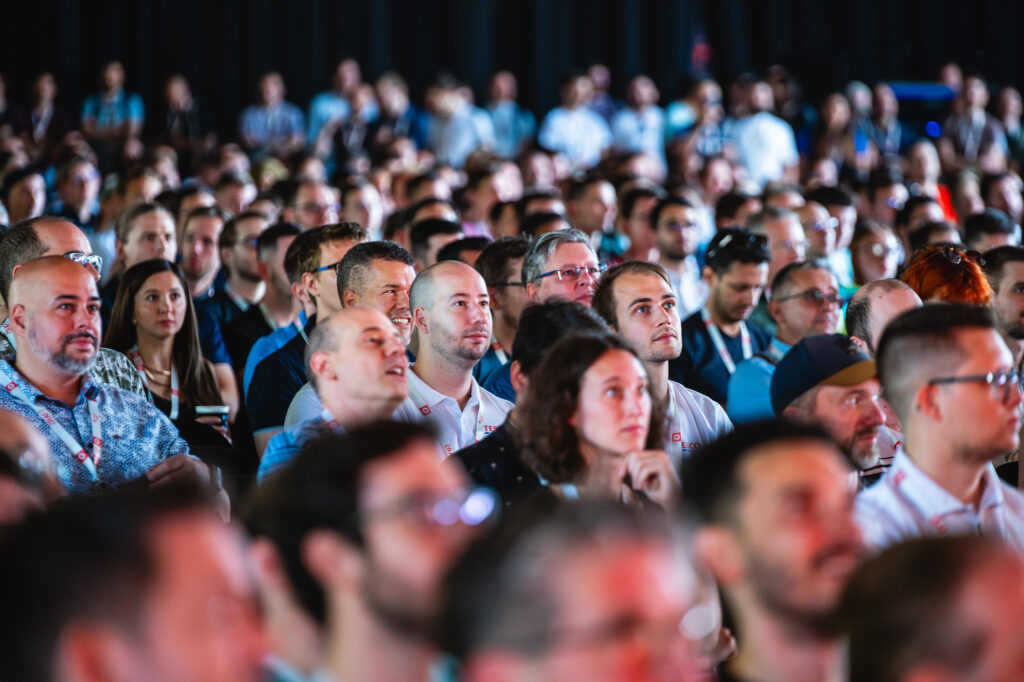
The New Era Has Already Begun
More than 2,000 engineers from over 50 countries will gather in Budapest for Craft Conference 2026.
Developers and leaders from companies such as Netflix, Adobe, Shopify, Nubank, BBC, Google, Anthropic, NVIDIA, and Meta will come together not only to present ideas but to think collectively about the future of their profession.
The software industry stands at a crossroads similar to the early days of the internet.
The key question is no longer whether AI will transform software engineering – it already has.
The real question is how we respond.
Will we adapt intentionally?
Or react too late?
Craft Conference 2026 is where that conversation happens. Where engineers explore the new realities of their profession and discover practical ways to move forward.
Not about fear. Not about hype. About responsibility and readiness in the exponential era.