


As digital products become more complex and more deeply embedded in everyday life, user experience has taken on a broader role than before. UX today is not only about usability or visual design, but also about how systems support understanding.
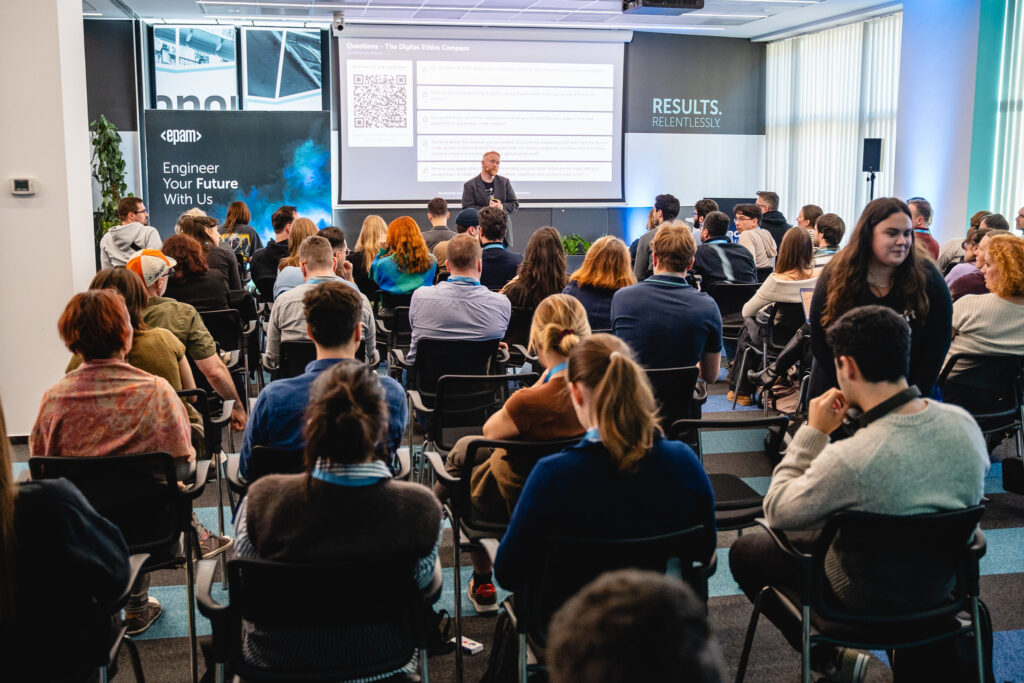
Compass UX Session took place on November 27, 2025, in Budapest. Organized by CraftHub and hosted at the EPAM Systems Office, the full-day event brought together designers and researchers to explore the evolving craft of user experience. Originally known as Amuse Conference, Compass UX Session continued its long-standing tradition of fostering community and knowledge exchange.
Bringing together 200 UX and product professionals, the event offered space for deep conversations about the role of design in shaping how people interact with technology.
Why This Matters Now
User experience has never been more central to digital innovation. As products scale and touch more aspects of people’s lives, UX practice must operate at the confluence of usability.
Compass UX Session underscored this reality by bringing together practitioners who are not just designing screens, but shaping systems of meaning and impact.
What the Conference Explored
Rather than presenting a single narrative about UX trends, the day’s program offered a spectrum of perspectives from practical research method refinements to explorations of emerging design contexts such as conversational interfaces and AI-augmented experiences.
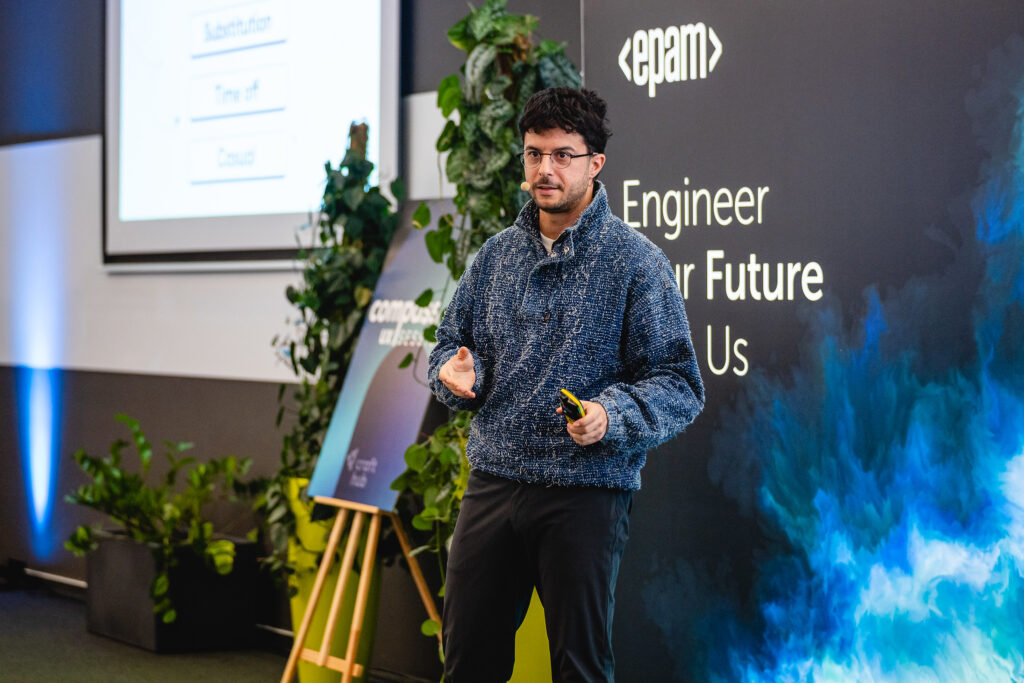
Opening the event, Josh Morales (UX Research Manager at Miro) shared insights on how research programs can scale beyond one-off studies into continuous systems that support fast-moving product teams. Drawing on real organizational challenges, he explored why many research democratization efforts fail, and how structured autonomy, and research infrastructure can help teams move faster without sacrificing insight quality.
The session on co-creation explored the role of tools in collaborative design work. Jane Vita (Lead Service Designer at Metso), shared how designers and facilitators can consciously select and adapt methods to support decision-making across multidisciplinary teams. She emphasized the importance of clear facilitation goals and well-designed tools when working with abstract or sensitive topics.
Melanie Buset, founder and lead user researcher, turned the focus inward by examining the experience of conducting research itself. Her talk encouraged practitioners to question assumptions around methods, ethics, and participant experience, showing how even well-intentioned research can lose impact when it lacks clarity or alignment with product decision-making.
Rasmus Sanko (Chief Strategy Officer at Charlie Tango), focused on the role of ethics in digital product development. His talk introduced a practical framework for working with digital ethics, showing how shared language and clear structures can help teams make more responsible decisions as technology becomes more complex and influential.
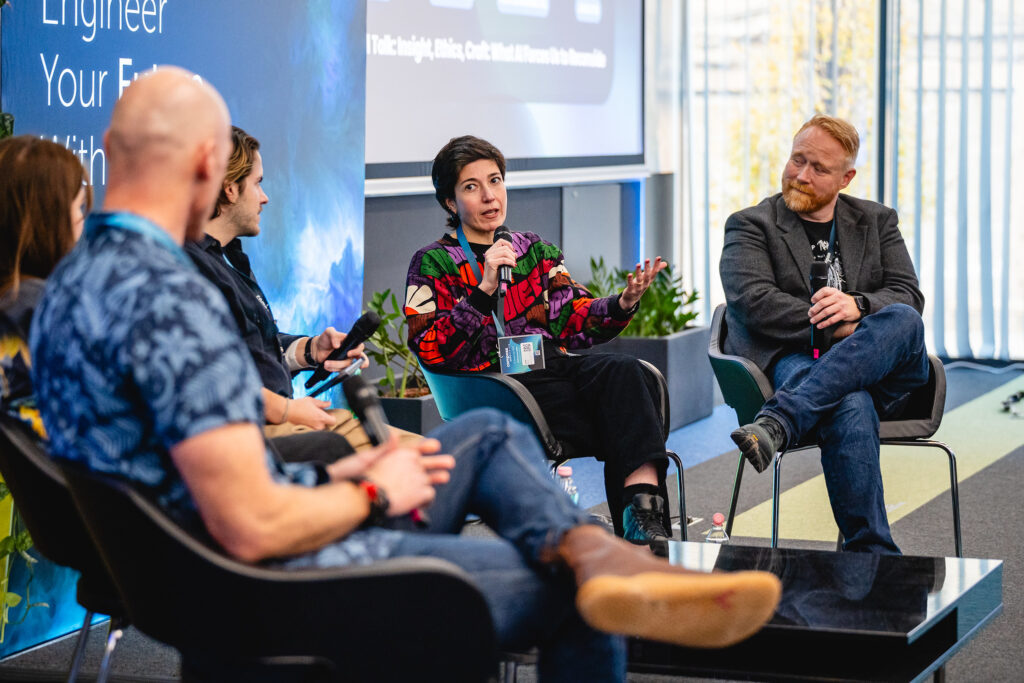
Later in the day, a panel featuring Pontus Wärnestål, Rasmus Sanko, Melanie Buset, and Jane Vita opened up a multiperspective conversation on how insight, ethics, and craft converge in modern UX practice. The dialogue blended strategic reflection with concrete examples of how ethical awareness changes design conversations in product teams.
In a closer look at engagement and interaction, Amanda Nicole Curtis (UX Researcher & Co-founder at the University of Oxford & Parasol Research) discussed how patterns from games, such as feedback loops and agency offer designers frameworks for more intuitive and motivating experiences.
Pontus Wärnestål (Senior Designer and Deputy Professor at Ambition Grp), explored how user experience design changes as AI moves into user-facing interactions. His session examined how conversational and AI-powered systems can be designed with the same clarity and consistency as traditional interfaces, offering designers a structured way to approach emerging interaction models.
Networking & Community
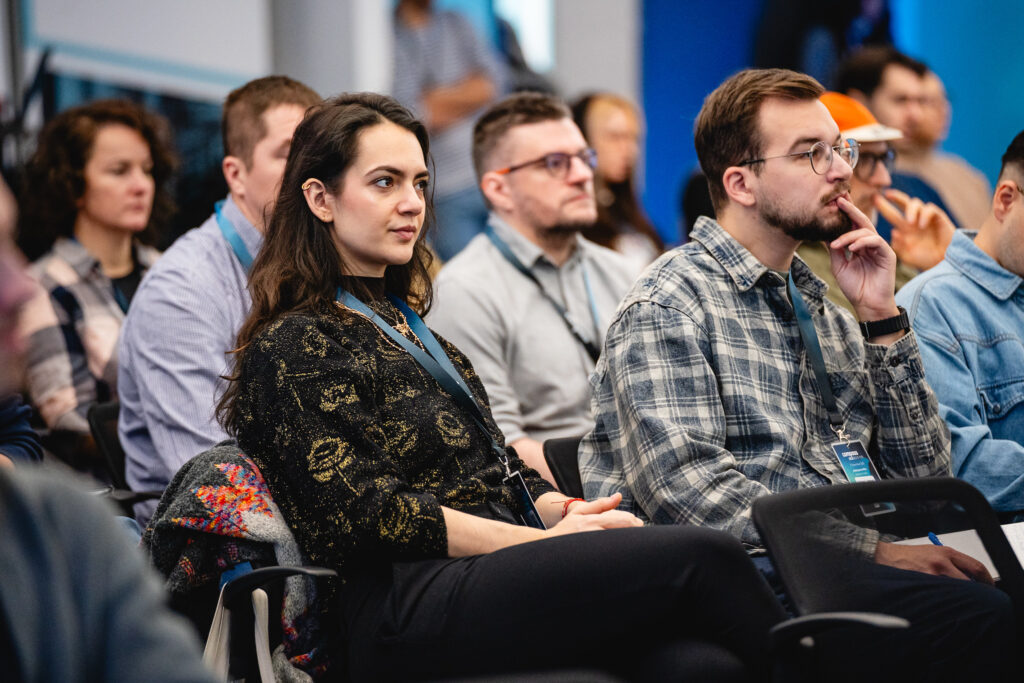
One of the conference’s most defining qualities was the quality of exchange between attendees. UX professionals from different departments could engage in deep discussions not only during sessions, but throughout coffee breaks and the networking party. Participants also had the chance to meet and interact with sponsors such as Instructure and EPAM. Coming from different backgrounds, participants shared strategies and challenges that highlighted both shared experiences and different perspectives across the field.
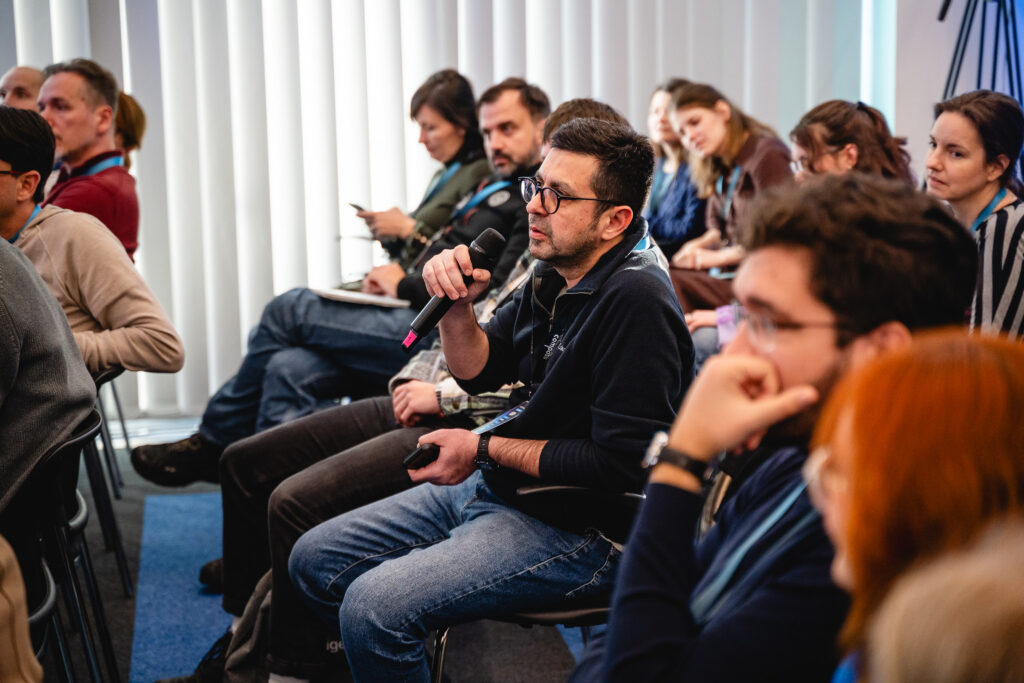
Interactive Q&A Sessions
Every talk was followed by a Q&A session, giving attendees the chance to ask questions. These conversations helped bridge the gap between what was shared on stage and the real design challenges participants face in their own work. By making space for open discussion, the Summit emphasized conversation over one-way presentations.
Looking Ahead: The Compass Universe Reunites
Compass UX Session 2025 was part of the wider Compass event series, which connects multiple technology-focused events into one ecosystem.
The community will come together at Compass AI & Tech Summit in 2026, a two-day conference designed to reflect how technology is actually built today.
The format brings AI / ML, Data, UX, Product, and Engineering Leadership into a single space, acknowledging that real innovation happens at the intersections between these fields. By reuniting the Compass tracks under one roof, the Summit aims to foster deeper dialogue across roles, and perspectives.
Ticket sales for Compass AI & Tech Summit will open in February, marking the next step toward the reunited Compass experience. Sponsorship opportunities are already available, allowing partners to engage early on in shaping the Compass community.