


Two days. Five tracks. 1,300+ builders under one roof. Compass AI & Tech Summit 2026 is history, and what a ride it was! In this recap, you will relive the event, meet the story behind it and take home lessons on how to make AI agents reliable.
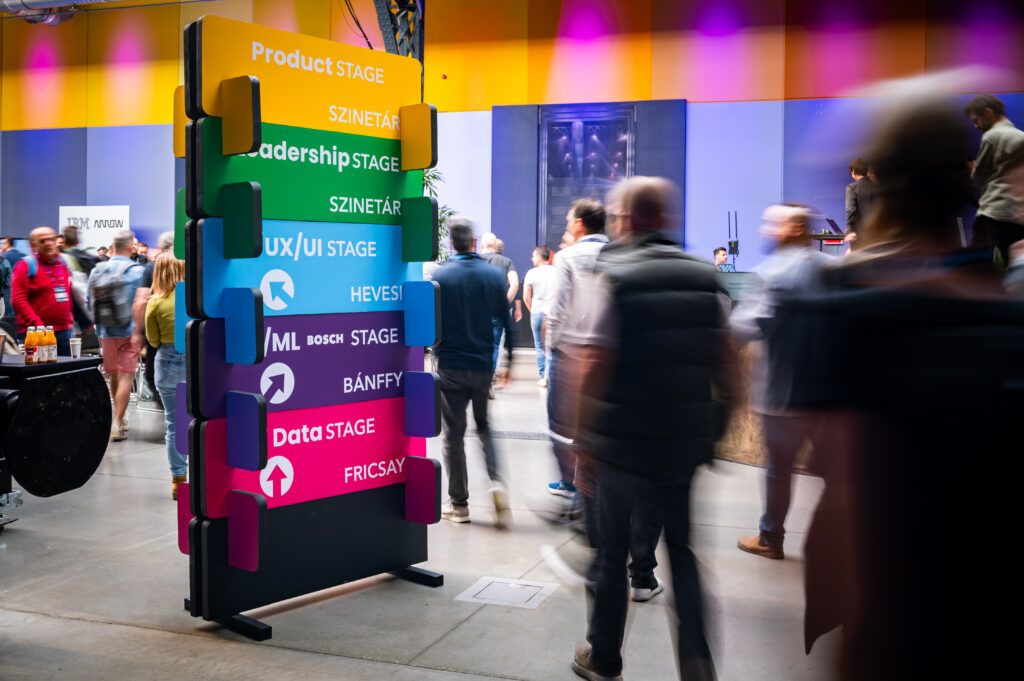
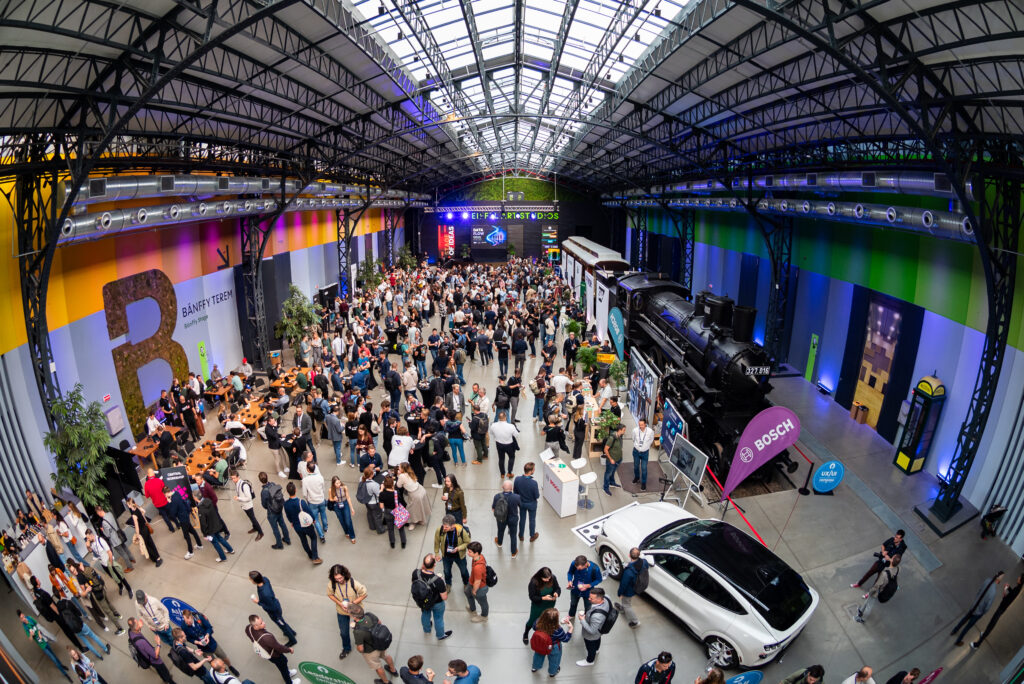
On 1-2 October, Eiffel Art Studios in Budapest buzzed from the first coffee to the last conversation. Compass is a 5-in-1 conference, and it was born from five smaller conferences: Amuse, Crunch, Impact, Stretchand Reinforce. Each one became a track: UX/UI, Data, Product, Leadership and AI/ML. Suddenly, designers, engineers, data people, product managers and leaders sat in the same rooms. They shared ideas, challenged each other and left with fresh perspectives.
What was Compass AI & Tech Summit 2026?
Picture five conferences running side by side under one roof. That is Compass. Attendees built their own path from stage to stage, and 60+ speakers took those stages.
The keynote lineup was strong. Andy Cotgreave, Bryce Johnson of Microsoft, Frank Coyle of UC Berkeley, Nesrine Changuel and Olena Kutsenko of Confluent all spoke. Emilie Schario of Anaconda, Seemin Suleri of Prima Assicurazioni, and Daniel Fitzpatrick and Maria Müller of Frank Reply joined them.
The excitement started even earlier. On 30 September, pre-conference masterclasses ran withBüşra Coşkuner, Joseph Pelrine and Daria Tarawneh. Then, on the evening of 1 October, the Tech Leaders’ Forum and the HR360° meetup kept the conversations going at the venue.
How did Compass AI & Tech Summit come about?
Every great event has a story. Compass grew out of five independent conferences. Stretch launched in 2013 for engineering leaders. Amuse (UX/UI) and Crunch (data) followed in 2015. Impact arrived in 2018 for product people. Finally, Reinforce started in 2019 for AI experts.
In 2023, we merged the five into Compass Tech Summit. Since then, the Compass family has also included Compass AI & Data Summit and Compass UX Session. The 5-in-1 concept explains the idea in more detail.
What did the speakers say about reliable AI agents?
The talks also showed where the industry stands. McKinsey’s November 2025 State of AI survey found that 88% of organizations use AI in at least one function. However, no more than 10% are scaling AI agents in any single function. That gap between trying agents and trusting them ran through the program.
The sessions point to five lessons. First, put rules outside the model. Second, treat data as a product for agents. Third, evaluate the whole system. Fourth, earn autonomy in stages. Finally, keep human judgment in the loop.
Why do AI agents fail in production?
Agents fail in predictable ways, so the fix sits outside the model. Three speakers made that case from different angles.
Frank Coyle, a lecturer at UC Berkeley, opened with failures many teams know. For example, an agent issues a second refund on the same order. His session argued that one layer is missing: an explicit ontology. Because it sits outside the model, it works as enforceable logic.
András Farkas of LOGINET made a similar point in “The AI Is Not the System”. A fluent answer is not one a company can sign off on. Instead, his session showed the checks around the model: reach the right data, check generated queries and make every number traceable.
Ofir Hamam of Terra Security looked at agents through an attacker’s eyes. His session argued that guardrails should never serve as security boundaries.
What does the data layer need to look like for agents?
Agents are a new kind of data consumer, but most data stacks predate them. Several sessions reached that conclusion independently.
Fabiane Nardon of TOTVS described the problem plainly. Data lakes serve analysts, and transactional systems serve applications. However, neither fits a reasoning loop that may issue thousands of unpredictable queries a minute. Her session showed how a semantic layer and well-designed MCP servers can close that gap.
Ronald Angel of Miro described a governed semantic layer for agents. According to his session description, the first pilot use case saw accuracy rise from about 40% to over 90%. Meanwhile, Thomas in’t Veld of Tasman Analytics warned that agents never pause to ask whether a metric is accurate.
Memory was the other half of the story. Praveen Kumar Bodigutla of LinkedIn explained how the Cognitive Memory Agent combines four memory types. Meanwhile, Oleksandra Bovkun of Databricks and Keren Ben-Arie of monday.com covered agentic memory and context from the data-engineering view.
How do teams measure agents and let them earn autonomy?
Speakers agreed that evaluation, not generation, is the hard part. They also agreed that autonomy should come in steps.
Leo Sjöberg of incident.io pointed out that production AI systems orchestrate hundreds of agents, tools and prompts. Therefore, an eval of a single prompt says little about the whole system. The goal is a loop fast enough to run constantly.
Serban Petrescu of Trilogy showed the same difficulty in a vision pipeline for remote exams. Yet it kept flagging students for drinking from a water bottle. In fact, according to his session description, one input change cut false positives by 27 points.
Two sessions turned this into a staged approach. Pedro Paiva and Tomasz Kiapsnia of Bolt described a layered system of skills, workflows and validation tools. Meanwhile, György Márk Varga of Shiwaforce presented a sandbox. First, the agent only watches. Then it suggests, and next it proposes plans that a person approves. However, irreversible actions always stay with a person.
How are engineering leaders scaling agents across an organization?
Three leadership talks described scaling agentic engineering as an organizational change. None, however, treated it as a tooling purchase.
Brian Scanlan of Fin described the company’s 2025 goal of doubling engineering throughput. The team used AI agents to ship real features on a large SaaS codebase. His session then covered skills, feedback loops and evals.
Jeremy Brown of GitGuardian said that 80 to 90% of the company’s code now comes from AI. Meanwhile, the quality bar stays unchanged. Still, going faster has not meant hiring fewer engineers.
Mike Spitz of Pro Football Focus argued that bolting AI onto existing processes is an expensive way to achieve nothing. Finally, his session shared the checklists his team built through trial and error.
Watch the Compass 2026 aftermovie
Moreover, more event videos are on the CraftHub YouTube channel.
Frequently asked questions
Where can I hear about the next Compass? Follow the Compass LinkedIn page and check compassaitechsummit.com. Moreover, the CraftHub newsletter shares new events and ticket offers.
How can I subscribe to the CraftHub newsletter? Visit the newsletter page and enter your email address. As a result, you will get news about Compass, Craft and our events.
Can I watch the Compass 2026 talks again? You can find the full list of sessions on the Compass talks page. In addition, ticket holders receive recordings and slides when speakers allow it. The talks will also be made publicly available over time, so stay tuned for updates!
How can I sponsor or speak at a future CraftHub event? Read about partnership options on the sponsorship page. Moreover, calls for speakers open on the event websites: HERE
What other events does CraftHub organize? CraftHub runs conferences, hackathons and meetups. Together, they give you many ways to join the community.